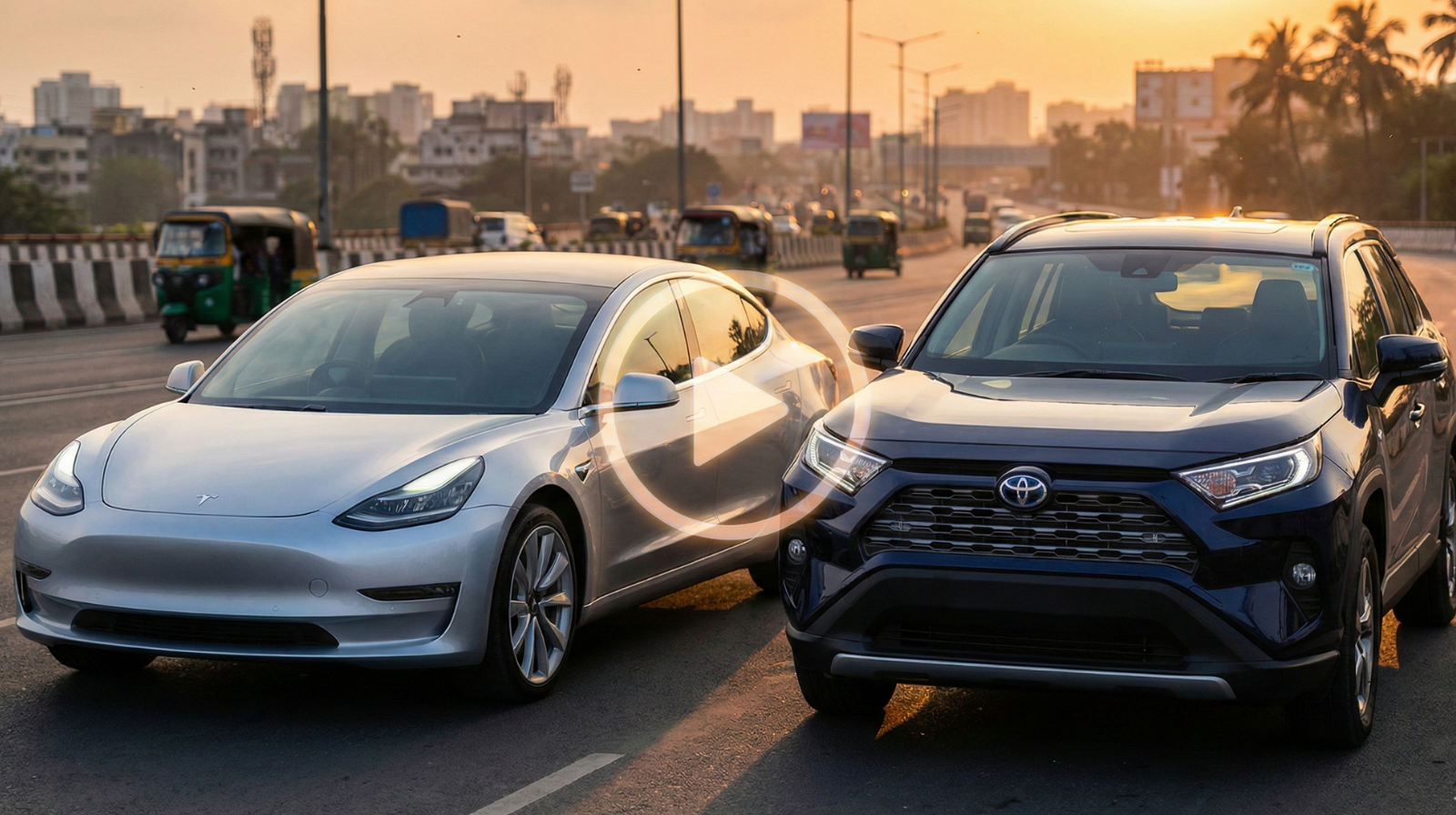
The Indian car market is changing fast, and by 2026, buyers are no longer confused about whether electric cars are the future. The real question now is whether hybrid cars or fully electric cars make more sense for everyday Indian conditions. With fuel prices staying high and charging infrastructure still evolving, many buyers are looking for a balanced and practical solution.
Both hybrid and electric cars promise lower running costs and reduced environmental impact. However, their real-world usability differs based on driving habits, city infrastructure, and long-term ownership expectations. Understanding these differences is essential before making a decision.
What defines a hybrid car and an electric car
A hybrid car uses a petrol engine along with an electric motor. The system automatically switches between the two to improve fuel efficiency, especially in traffic. Hybrid cars do not need external charging and work like regular petrol cars.
Electric cars, on the other hand, run entirely on battery power. They need to be charged through home or public charging stations. Electric vehicles offer silent driving and zero tailpipe emissions.

Driving experience in Indian conditions
Hybrid cars feel familiar to most drivers. They start quietly in traffic and switch to petrol power on highways. There is no range anxiety, which makes them suitable for long drives and mixed usage.
Electric cars offer instant acceleration and smooth driving, especially in city traffic. They handle stop-and-go conditions very efficiently. However, planning longer trips requires awareness of charging points.
Mileage, range, and running costs
Hybrids deliver excellent fuel efficiency, particularly in city driving. They help reduce fuel expenses without changing driving habits.
Electric cars have the lowest running cost per kilometer. Charging an EV costs significantly less than refueling a petrol car. For daily commuters, this can lead to substantial savings over time.

Charging and refueling convenience
Hybrid cars require no charging setup. They can be refueled at any petrol station, making them convenient for users without dedicated parking or charging access.
Electric cars require reliable charging options. Home charging is ideal, while public charging networks are improving but still uneven across regions.
Maintenance and long-term reliability
Hybrid cars have both engine and battery systems, which makes them slightly more complex. However, modern hybrids are designed for long-term durability.
Electric cars have fewer moving parts, which reduces maintenance needs. Battery health is the main long-term consideration, but technology has improved significantly.

Cost of ownership
Hybrid cars usually have a higher upfront cost than petrol cars but offer fuel savings over time. They are often more affordable than electric cars initially.
Electric cars have a higher purchase price but offer the lowest running and maintenance costs. Government incentives and lower fuel expenses help offset the initial investment.
Environmental impact
Electric cars produce zero emissions while driving, making them ideal for reducing urban pollution.
Hybrid cars reduce emissions compared to traditional petrol cars but are not completely emission-free. They still offer a meaningful improvement in fuel efficiency.

Which option suits which buyer
Hybrid cars are best for users who drive long distances, live in areas with limited charging, or want a hassle-free transition from petrol cars.
Electric cars suit city users with predictable daily routes, access to home charging, and a focus on low running costs and quiet driving.
Final conclusion
In 2026, both hybrid and electric cars make sense depending on usage. There is no one-size-fits-all answer.
Hybrid cars offer flexibility and peace of mind, while electric cars deliver the lowest running costs and the smoothest city driving experience. The right choice depends on lifestyle, driving patterns, and infrastructure access.